Key takeaways
- Peru shipped 24,536 metric tons of dried seaweed worth USD 21.5 million in 2024, but the supply chain is far narrower than the headline volume suggests.
- A single region, Ica, accounted for 51.8% of 2024 export volume, and within Ica just two exporters, Globe Seaweed International and Algas Sudamerica, controlled roughly three quarters of outbound cargo, concentrating both supply and risk.
- Roughly 97% of exports are brown seaweed for industrial extraction, while the edible red varieties prized for human consumption remain a thin, emerging slice that is hard to source at scale.
The volume looks national. The supply chain is not.
On paper, Peru is a serious seaweed origin: 24,536 metric tons left the country in 2024 for USD 21.5 million, making it the second largest supplier in the Americas after Chile. A buyer reading that number could be forgiven for assuming a broad, competitive supplier field. The reality is the opposite. More than half of 2024 volume, 51.8%, came from one region, Ica, and a single destination, China, absorbed 95.5% of it. A category that looks diversified at the country level is in fact narrow at the point where you actually place an order.
The concentration runs deeper than geography. Inside Ica, just two exporters, Globe Seaweed International and Algas Sudamerica, handle roughly 74% of the region's outbound cargo, 41.3% and 32.8% respectively. Both have been flagged in the Peruvian press for operating processing at industrial scale without the corresponding industrial license, prompting Supreme Decree 024-2025-PRODUCE, which gives operators a window to formalize. For an importer, that is not background noise. It is direct counterparty risk: continuity of supply, documentation, and the legality of the harvest all sit with a thin layer of intermediaries.
The raw material itself is gathered from the wild by artisanal collectors along the coast, then bought, dried, and consolidated by these exporters. That structure means quality, traceability, and harvest sustainability vary enormously between operators. The country is not the variable a buyer controls. The operator is.
One region ships the majority of Peru's seaweed
Ica alone accounted for more than half of 2024 dried-seaweed volume.
Source: Peru Sourcing Partners analysis
Why Peru, and why the edible niche is the interesting one
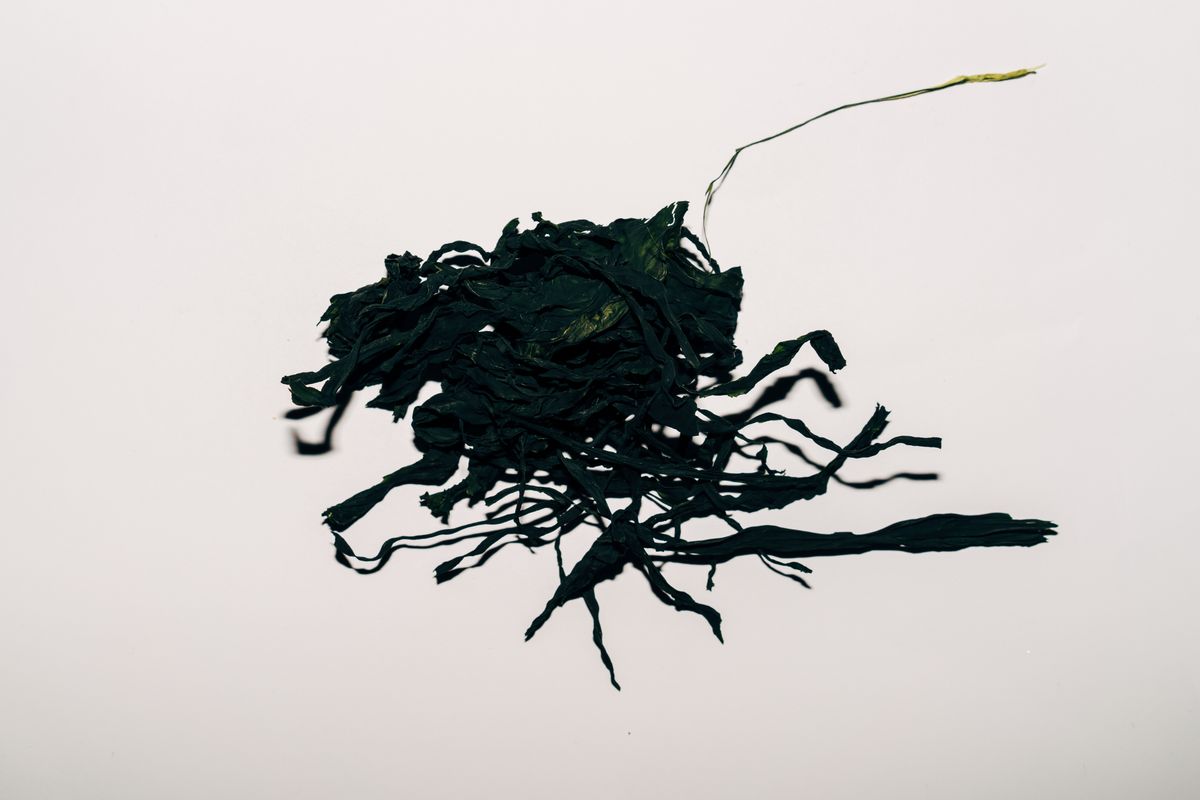
Peru's cold, nutrient-rich Humboldt Current grows large standing stocks of brown seaweed, principally Lessonia and Macrocystis, which today drive about 97% of export volume as raw material for alginate, fertilizer, and feed in Asia. That industrial base is what built the 24,536-ton trade. But the more interesting story for a specialty-ingredient buyer sits in the other 3%: the red seaweeds, above all Chondracanthus chamissoi, known locally as yuyo, an edible variety eaten in Peru since pre-Hispanic times and a traditional companion to ceviche.
Demand for seaweed as direct human food, not just an extraction feedstock, is rising in Asia and Europe, and Peru's edible red varieties are drawing fresh interest for dehydrated, food-grade export. This is an emerging category by definition: the volumes are small, the grade requirements are stricter, and the number of operators who can deliver consistent food-grade product, with the right drying, cleaning, and documentation, is smaller still. Secondary destinations beyond China, including Denmark and France, point to exactly this higher-value, food-and-ingredient pull.
That is the opportunity and the trap in one. A buyer who wants food-grade Peruvian seaweed cannot simply tap the industrial supply chain that ships brown algae to China by the container. The handful of operators capable of meeting human-consumption standards have to be identified and verified one by one. Peru has the resource and the heritage. What it does not yet have is a deep, ready-made bench of vetted, export-ready food-grade suppliers.
Inside Ica, two operators control three quarters of the cargo
Globe Seaweed International and Algas Sudamerica together moved roughly 74% of Ica's outbound seaweed in 2024.
Residual 25.9% is computed; the two named shares are reported.
Source: Peru Sourcing Partners analysis
So what a buyer should do before committing
Treat origin and operator as two separate decisions. Peru clears the origin question: real resource, real volume, a genuine and growing edible niche. The operator question is where the money and the risk live. With supply this concentrated, and with licensing and traceability unsettled for some of the largest names, the difference between a reliable multi-year partner and a stalled shipment is which company you sign with, not which country.
The practical checklist is short but unforgiving: confirm the operator holds the correct industrial processing authorization, that the harvest is documented and legal, that drying and handling meet food-grade standards if you are buying for human consumption, and that the variety and grade match your specification rather than whatever the wild harvest happened to yield. Each of these is verifiable on the ground in Peru, and each is routinely missed by buyers working from a distance through a broker.
If you are evaluating Peruvian seaweed, the highest-leverage next step is a vetted shortlist: a small set of operators confirmed against licensing, traceability, grade, and capacity for your specific use, industrial or food-grade. Request a vetted shortlist and start from suppliers that have already been checked, rather than from a directory of names.
Brown industrial seaweed dwarfs the edible red niche
Red varieties, including the edible Chondracanthus chamissoi (yuyo), are a thin slice of total export volume.
Composition is a multi-year structural baseline, 1995-2020, not a single calendar year.
Source: Peru Sourcing Partners analysis
Get a vetted shortlist of Peru seaweed suppliers
Tell us your variety, grade, and whether you need industrial or food-grade product. We verify operators on the ground in Peru against licensing, traceability, harvest legality, and capacity, then hand you a short list of suppliers that have already been checked, plus direct introductions.
Request an introductionCommon questions
How much seaweed does Peru export, and where does it go?
In 2024 Peru exported 24,536 metric tons of dried seaweed worth USD 21.5 million FOB. China took 95.5% of the volume, with smaller flows to markets including Denmark and France. In the first five months of 2025, exports already reached 18,569 metric tons worth USD 14.7 million FOB, pointing to a strong year.
Can I source Peruvian seaweed for human consumption rather than industrial extraction?
Yes, but it is an emerging niche. About 97% of exports are brown seaweed destined for extraction (alginate, feed, fertilizer). The edible red varieties, chiefly Chondracanthus chamissoi or yuyo, make up a small share and require food-grade drying, cleaning, and documentation. The pool of operators able to deliver consistent food-grade product is narrow, which is exactly why vetting matters.
What is the main risk when buying seaweed from Peru?
Concentration and traceability. More than half of 2024 volume came from one region, Ica, and roughly three quarters of Ica's cargo moved through just two operators, some of which have faced questions over industrial licensing and harvest legality. The right next step is to verify the specific operator's authorization, traceability, and grade before committing, rather than relying on the country reputation alone.
About the data: Figures reflect the latest full year (2024) and 2025 year-to-date, cross-checked across two or more public reports; species composition uses a documented multi-year structural baseline. Figures reflect Peru export data curated and classified by Peru Sourcing Partners.
Specialty ingredient sourcing intelligence from Peru, straight to your inbox
a short brief on Peru sourcing, sent occasionally.