Key takeaways
- Peru is one of the few origins the ICCO rates fully fine-flavor, but only about 75% of exports actually qualify, the rest is generic bulk, much of it the high-yield CCN-51 hybrid that carries no fine-flavor character.
- Average export prices climbed from roughly US$3.3/kg in 2019-2022 to US$7.85/kg in 2024 and around US$9.0/kg in 2025, so a wrong-grade lot now costs far more than it used to.
- Supply is highly fragmented: roughly 120,000 smallholders farming 1 to 5 hectares each, with only about a quarter of exports moving through cooperatives, so quality varies lot to lot and supplier to supplier.
Buying Peru does not get you fine-flavor cacao
Peru sits in a small club of origins the International Cocoa Organization rates fully fine-flavor, and that reputation pulls premium buyers in. But the rating describes the country, not the container you receive. The ICCO classifies about 75% of Peru's exports as fine-flavor, a figure it cut from 90% in 2016 precisely because so much new planting was the high-yielding CCN-51 hybrid, which carries essentially no fine-flavor character and trades at or near the commodity benchmark.
So a generic shipment labeled Peruvian cacao can quietly be CCN-51 or under-fermented Trinitario, flat and commercial-grade, while the buyer pays a premium price expecting Chuncho or Piura white. With average export prices having tripled in a few years, the gap between what you ordered and what arrives is now an expensive mistake, not a rounding error.
The structural reason is fragmentation. Peru's cacao comes from roughly 120,000 smallholders working 1 to 5 hectares each, spread across San Martin, Junin, Ucayali, Huanuco, Cusco and Piura. Variety, fermentation discipline and post-harvest handling change farm to farm and cooperative to cooperative, so two lots from the same region can sit at opposite ends of the quality scale.
About a quarter of Peru's cacao exports fall outside the fine-flavor grade
Source: Peru Sourcing Partners analysis
The genetics that make Peru worth the search
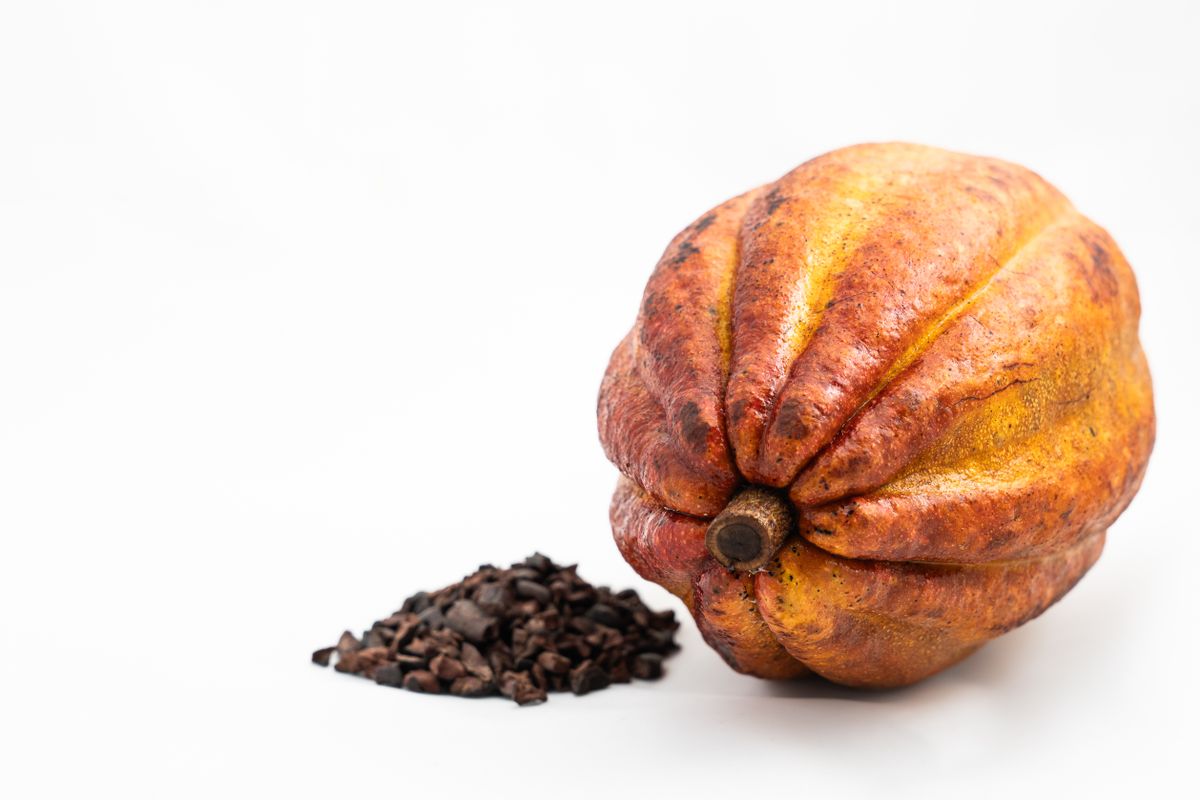
When you reach the right grower, Peru offers genetics almost no other origin can match. Chuncho, grown in the high valleys of Cusco, is one of the rarest and most genetically distinct cacaos in commercial use, a genuine ancient Criollo relative rather than a modern hybrid, with nutty, spiced, red-fruit and dried-flower notes. In Piura, farmer selections like Piura Blanco and Norte Potrero deliver bright, citrus-accented profiles with caramel undertones that command standalone single-origin programs.
That quality ceiling shows up in the numbers. Peru's cacao and derivatives exports reached roughly US$1.3 billion in 2024, more than tripling year on year on the back of record prices, and the bean stream alone moved about 96,400 tons. Average FOB prices rose from around US$3.3/kg in 2019-2022 to US$7.85/kg in 2024 and roughly US$9.0/kg in 2025, with certified-organic lots commanding a further premium near US$2/kg.
Demand is broad and genuinely global. In 2024 the top destinations were the United States, Malaysia, Indonesia, the Netherlands, Belgium and Spain, a mix of premium chocolate makers and large processors. The fine-flavor tier within that flow is the slice premium brands fight over, and it is exactly the slice a generic broker cannot reliably guarantee.
Peru's average cacao export price nearly tripled in six years
Source: Peru Sourcing Partners analysis
The decision is the supplier, not the country
If 75% of exports are fine-flavor and 25% are not, the single most important sourcing decision is not whether to buy Peru, it is which grower, cooperative or variety you lock in. That means verifying the variety is what the label claims, confirming fermentation and drying protocols, and matching a specific lot profile to your product before a single container moves.
The 2025 picture sharpens the point. Through the first seven months of 2025 export value rose about 41% while volume fell roughly 32% after late-2024 drought tightened supply, a price-driven, supply-constrained market where the best lots get spoken for early. In that environment, a buyer working off a generic origin claim is competing for whatever is left, not the bean they actually want.
The practical move is to start from a short, vetted list rather than the open market: a handful of suppliers whose variety, grade and handling have been checked on the ground, mapped to your flavor and volume needs. That is the difference between buying Peruvian cacao and buying the fine-flavor cacao you came for.
Peru's cacao reaches premium chocolate hubs and large processors alike
Source: Peru Sourcing Partners analysis
Get a vetted shortlist of Peru fine-flavor cacao suppliers
Tell us the variety, grade and volume you need, whether that is Chuncho from Cusco, Piura white, or a specific fermentation profile. We verify variety, handling and capacity on the ground in Peru and hand you a short list of suppliers worth a conversation, plus warm introductions.
Request an introductionCommon questions
Is all cacao from Peru fine-flavor?
No. The ICCO rates Peru a fine-flavor origin, but it classifies about 75% of the country's exports as fine-flavor, with the remaining quarter being bulk or generic material, much of it the high-yield CCN-51 hybrid that carries no fine-flavor character. The country rating does not guarantee any individual shipment, which is why variety and supplier verification matters.
What are Peru's standout fine-flavor varieties?
Chuncho from the high valleys of Cusco is one of the rarest cacaos in commercial use, an ancient Criollo relative with nutty, spiced and red-fruit notes. Piura white selections such as Piura Blanco and Norte Potrero offer bright, citrus-accented profiles with caramel undertones. Both sit well above generic Trinitario or CCN-51 in cup quality and price.
Why is supplier vetting so important for Peruvian cacao?
Peru's supply is highly fragmented, with roughly 120,000 smallholders farming 1 to 5 hectares each and only about a quarter of exports moving through cooperatives. Variety, fermentation and drying vary lot to lot, so two shipments from the same region can differ sharply. With export prices having tripled since 2019, a mislabeled or wrong-grade lot is an expensive error, making on-the-ground verification the core of the buying decision.
About the data: Figures compiled from public Peruvian trade and industry reporting for 2024-2025, cross-checked across at least two sources for headline numbers; supply-side export data only. Figures reflect Peru export data curated and classified by Peru Sourcing Partners.
Specialty ingredient and cacao sourcing intelligence from Peru, in your inbox
a short brief on Peru sourcing, sent occasionally.