Key takeaways
- Paprika is the load-bearing product in Peruvian capsicum, at US$103.5 million, or 46% of category value, in the first nine months of 2024, so paprika quality effectively defines a buyer's experience of Peru.
- Demand is concentrated: Mexico and the United States together take close to 90% of Peruvian paprika by value (Jan to Apr 2025), which means most supply chains are tuned to those two buyers and a new market needs a supplier willing to adapt grade and packaging.
- The supply base is fragmented and uneven: more than 65 companies export paprika to about 20 destinations, led by names such as S&M Foods, Agroindustrial E&C, ADB International, Agroexportadora Sol de Olmos, and Arbayaza Export, with value swinging from US$149.2M (Jan to Sep 2023) to US$111.2M (Jan to Sep 2024), so picking the right exporter matters more than picking Peru.
The Risk in Peruvian Paprika Is Inside the Color Number, Not the Origin Label
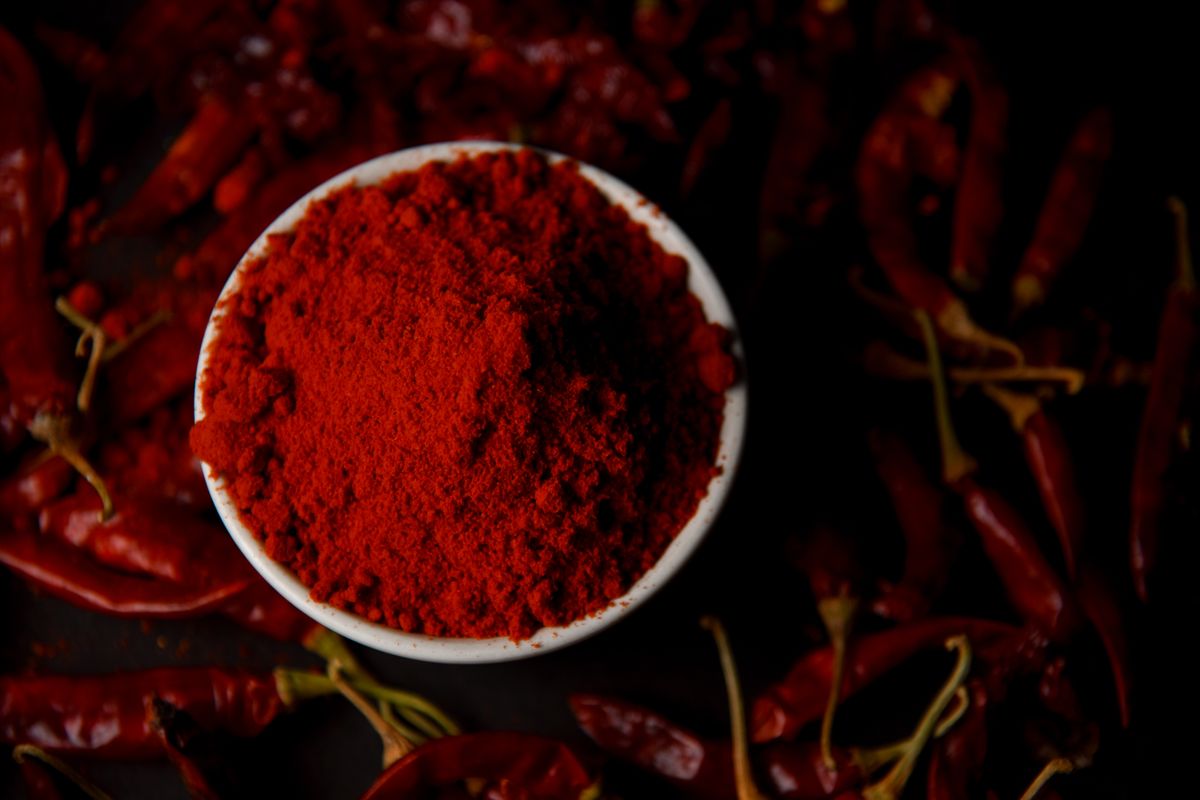
Buyers tend to source "Peruvian paprika" as if it were one specification. It is not. The attribute that decides whether a lot is worth its price is ASTA color, the measured pigment strength that drives how paprika performs in a blend, a sauce, or a retail pack. Peruvian paprika is prized internationally precisely because it carries high ASTA color, and Spanish processors buy it to lift the color of cheaper origins rather than for bulk volume. That premium only holds if the specific supplier delivers the color, grade, and consistency claimed on the spec sheet.
Below the color number sits a second, quieter risk: food safety. Dried chilies and ground paprika are sensitive to mycotoxins, microbial load, pesticide residues, and adulteration, and tolerances differ between the United States, Mexico, and the European Union. A lot that clears one market can be detained in another. Across a base of more than 65 paprika exporters serving around 20 destinations, the maturity of laboratory testing, traceability, and certification is genuinely uneven, and the gap is invisible from a catalog or a price quote.
The category also moves in price, not just volume. Dried paprika exports in the first nine months of 2024 fell to US$111.2 million from US$149.2 million a year earlier, a drop driven by softer prices after the 2023 highs rather than by collapsing demand. When prices compress, the temptation to cut corners on grade and testing rises, and the cost of choosing the wrong supplier rises with it.
Paprika carries nearly half of Peru's capsicum export value
Paprika alone is 46% of the US$223.7M capsicum total
Just over half of all capsicum ships as dried product
Source: Peru Sourcing Partners analysis
Peru Earns Its Top-Ten Seat on Color and Year-Round Supply
Peru sits at number ten among global capsicum exporters, holding roughly 3% of world shipments, and capsicum is a meaningful non-traditional export line at about US$223.7 million in the first nine months of 2024. Paprika anchors that figure at 46% of value, with piquillo peppers and bell peppers filling out the rest. Just over half of capsicum value ships as dried product and a large share as canned, which tells a buyer that Peru is built for processed and ingredient-grade demand rather than only fresh.
The structural advantages are real. Peru's coastal desert valleys give intense sun, low disease pressure, and irrigation control, which is exactly the environment that builds high ASTA color in paprika. Production and storage across coastal, central, and southern valleys give the country effectively year-round commercial availability, so a buyer is not locked into a single narrow harvest window. Demand is concentrated in Mexico and the United States, which together take close to 90% of paprika by value in early 2025, evidence that the most demanding processed-food buyers already rely on the origin.
But the same data that flatters Peru also exposes the fragmentation. More than 65 companies export paprika, led by names such as S&M Foods, Agroindustrial E&C, ADB International, Agroexportadora Sol de Olmos, and Arbayaza Export, with monthly share rankings that shift from one period to the next. Geographic origin is heavily concentrated, the Barranca area of the Lima region alone accounted for about 96% of paprika value in the first four months of 2025, and grade mix varies, with table grade at roughly 46% of paprika value in that period and whole-with-seed material a large second slice. Top-ten origin status is a starting point. It does not tell a buyer which of those 65-plus exporters can hit a target ASTA color, hold a residue spec, and document it.
Two markets dominate paprika demand, leaving the base concentrated
Mexico US$22.4M, United States US$14.9M, Jan to Apr 2025
Close to 90% of paprika value rides on two buyers
Source: Peru Sourcing Partners analysis
Specify the Color and the Lab Work, Then Vet the Supplier to Match
For an importer, the move is to treat ASTA color and food safety as the primary selection filters, ahead of headline price. Write the target ASTA range, moisture, granulation, and the residue and mycotoxin limits for your destination market into the inquiry, then qualify suppliers against that spec rather than against a brochure. Because Peruvian paprika is so often used to upgrade the color of blends, a half-point of ASTA can be worth more than a few cents per kilogram, and the only way to know who delivers it consistently is supplier-level evidence, not origin reputation.
Concentration is the second thing to design around. With Mexico and the United States absorbing close to 90% of paprika value in early 2025, many Peruvian exporters are optimized for those buyers' formats and tolerances. If you ship to the European Union, the Middle East, or a market with tighter residue rules, you want a supplier with a documented track record into comparable specifications, not one improvising for the first time on your order. Verifying that history up front is far cheaper than a detained container.
This is where a vetted shortlist earns its place. Rather than cold-emailing dozens of the 65-plus exporters and hoping the color and certificates are real, start from a short, pre-qualified list matched to your ASTA target, your grade, and your destination's safety rules, with the claims checked on the ground in Peru. Request a vetted shortlist and an introduction, and let the supplier selection be the part of the decision that is verified rather than assumed.
Dried paprika value fell on price, not on lost demand
A 25% drop driven by softer prices after the 2023 highs
Volume held up while average price per kg fell to about US$3.71 in the first half of 2024
Source: Peru Sourcing Partners analysis
Get a vetted shortlist of Peruvian paprika and capsicum suppliers matched to your color and safety spec
Tell us your target ASTA color, grade, and destination market. We return a short, pre-qualified list of Peruvian paprika and capsicum exporters, with claims checked on the ground in Peru, and warm introductions to the ones that fit. You evaluate suppliers who can actually hit your specification instead of cold-emailing dozens and hoping.
Request an introductionCommon questions
What makes Peruvian paprika worth a premium over other origins?
Its high ASTA color. Peruvian paprika is sought internationally for strong, stable pigment, which is why processors use it to lift the color of blends rather than only for bulk fill. The premium is real, but it is delivered by the individual exporter's grade and consistency, not by the country label alone.
How concentrated is Peru's paprika buyer base, and why does it matter?
Mexico and the United States together take close to 90% of Peruvian paprika by value, with Mexico around 53% and the United States around 35% in the first four months of 2025. Many exporters are tuned to those two markets' formats, so a buyer in the EU or another region should verify that a supplier has a documented record into comparable specifications and safety rules.
Is the Peruvian paprika supply base consolidated or fragmented?
Fragmented. More than 65 companies export paprika to about 20 destinations, with leaders such as S&M Foods, Agroindustrial E&C, ADB International, Agroexportadora Sol de Olmos, and Arbayaza Export trading places month to month. Dried paprika value also swung from US$149.2 million to US$111.2 million between the first nine months of 2023 and 2024 on price moves. With that many suppliers and uneven testing maturity, choosing the right exporter matters more than choosing Peru.
About the data: Figures compiled from Peruvian guild and trade-press export reporting for 2023 to 2025; client-facing label: Source: Peru Sourcing Partners analysis. Figures reflect Peru export data curated and classified by Peru Sourcing Partners.
Processed-food sourcing intelligence on Peru, from paprika color to food-safety risk, in your inbox
a short brief on Peru sourcing, sent occasionally.