Key takeaways
- Peru's shrimp supply is hyper-concentrated by geography: about 90 percent of national whiteleg shrimp comes from Tumbes, and roughly 34 farms account for around 85 percent of output, so a single regional shock moves the whole supply base.
- Supply is volatile, not stable: the Sociedad Nacional de Acuicultura projected the 2024 harvest at about 21,000 tonnes, nearly half the prior year, as low prices and tight working capital idled farms and cut stocking density.
- The exporter field is top-heavy: historically the three largest, Marinazul, Inversiones Prisco and Eco-Acuicola, supplied over 63 percent of shipments, and by 2024 Marinazul alone accounted for roughly half of frozen shrimp volume, so picking the right counterparty is the decision that matters.
Why "buy from Peru" is not a sourcing decision
Peru looks like a single, tidy origin on a spec sheet. It is not. Whiteleg shrimp here is grown almost entirely in one border region, harvested by a small set of farms, and shipped by an even smaller set of exporters. When buyers treat "Peruvian shrimp" as a commodity they can pull from any supplier interchangeably, they inherit a supply base whose volume can swing by tens of percent from one year to the next.
The last two years prove the point. Export volume in 2023 reached roughly 32,536 tonnes, slightly above 2022, yet FOB value fell about 16 percent to US$175.3 million as world shrimp prices collapsed under low-cost competition. Then 2024 output was projected to nearly halve, to around 21,000 tonnes, as companies closed, sown area dropped from 3,161 hectares to roughly 1,400, and surviving farms cut stocking density for lack of working capital.
For an importer, this is the difference between a supplier who can honor a contract through a down cycle and one who quietly disappears mid-season. Origin tells you almost nothing about that. The specific farm, its certification status, its balance sheet, and its harvest calendar tell you everything.
Volume rose into 2023, then nearly halved in 2024 as farms idled
Source: Peru Sourcing Partners analysis
What Tumbes whiteleg shrimp actually offers a vetted buyer
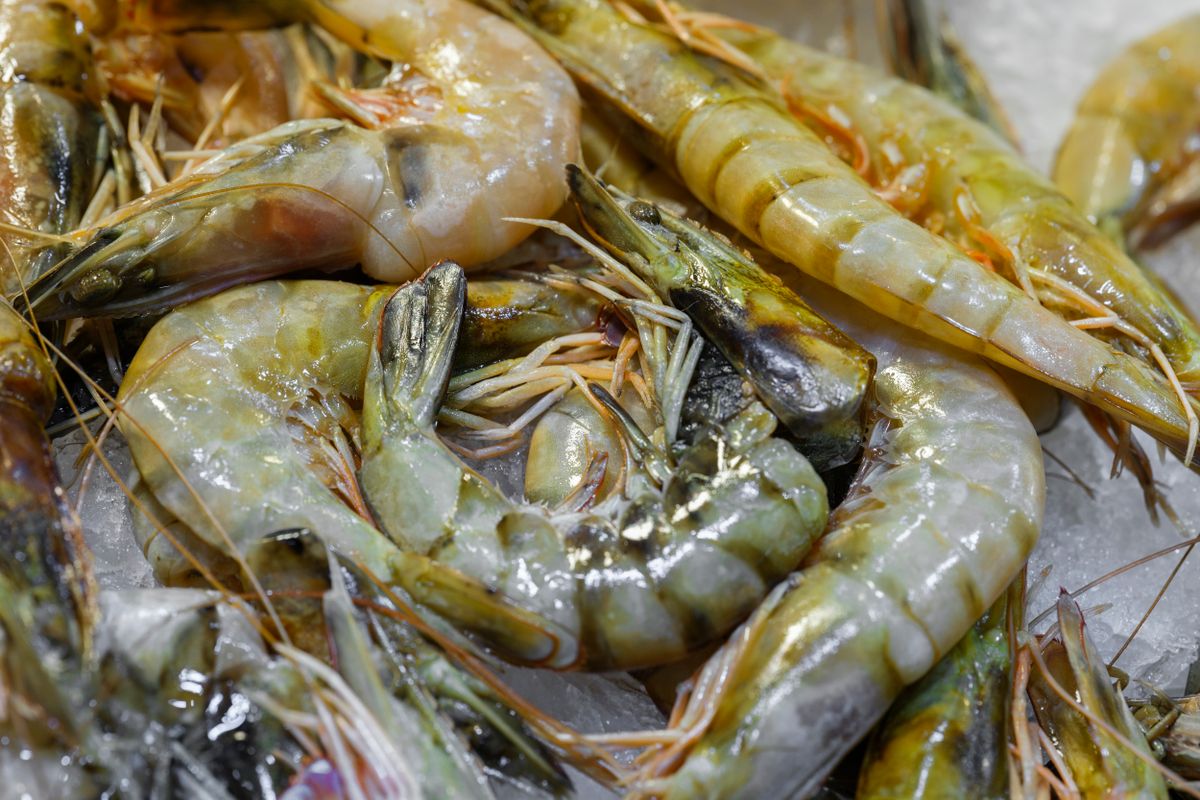
Peru's advantage is a clean, traceable, premium farmed product when you source the right tier of supplier. Whiteleg shrimp (Penaeus vannamei) from the Tumbes delta is a high-value line: in national frozen seafood data it carried about 8 percent of volume but 17 percent of value, signalling a product that competes on quality and presentation rather than on lowest price.
The serious producers have built the traceability and certification stack that demanding markets require. Peruvian farms have pursued GlobalG.A.P. Aquaculture certification and are moving toward Aquaculture Stewardship Council (ASC), Best Aquaculture Practices (BAP), and organic standards, where pond-level traceability and worker-welfare audits are the foundation. Those certifications are exactly what separates an export-grade supplier from a domestic-grade one, and they are not evenly held across the base.
Destination patterns confirm this is a quality play, not a discount play. Historically the United States and Spain were the dominant buyers, with the US around half of value and Spain near a fifth; by 2025 the market mix had broadened toward China, South Korea, Spain, the United States, and Japan, with shipments reaching well over 80 markets. A buyer who vets for the right certifications and presentations can plug into channels that already clear stringent import requirements.
A few exporters carry most of the volume: concentration is structural
Source: Peru Sourcing Partners analysis
The sourcing decision: which supplier, not which country
Because supply is concentrated by region and by exporter, and because output halved in a single year, the gap between the best and the average Peruvian shrimp supplier is wide and consequential. Two suppliers can both be "from Tumbes" while differing on certification, traceability to pond, harvest reliability, and financial survivability through a price trough. Only one of them protects your order.
That is why the practical question is never "should I buy Peruvian shrimp" but "which specific farm and exporter should I buy from, and can I prove they hold the certifications, the traceability, and the harvest capacity they claim." In a base this concentrated and this volatile, that verification is the entire job.
Before you commit volume, get a shortlist of vetted Tumbes whiteleg shrimp suppliers screened for certification status, traceability, presentation range, and recent shipment activity, so you are choosing the right counterparty rather than gambling on the flag. Request a vetted shortlist and we will return suppliers matched to your specification, not a generic directory.
Get a vetted shortlist of Tumbes whiteleg shrimp suppliers
Tell us your specification, certifications, presentations, grades, and target volume, and we will return a shortlist of Peruvian whiteleg shrimp suppliers screened on the ground for certification status, traceability, and recent shipment activity. You choose the right counterparty instead of gambling on origin.
Request an introductionCommon questions
How much whiteleg shrimp does Peru actually export, and is supply reliable?
Peru exported roughly 32,536 tonnes of whiteleg shrimp in 2023, worth about US$175.3 million FOB. Supply is not stable: the 2024 harvest was projected to fall to around 21,000 tonnes, close to half the prior year, after low prices and tight working capital idled farms. That volatility is exactly why supplier selection and contract reliability matter more than headline country volume.
Why is Tumbes so important for Peruvian shrimp?
Tumbes, on the northern border with Ecuador, grows about 90 percent of Peru's whiteleg shrimp, and roughly 34 farms account for around 85 percent of national output. That concentration means a single regional event, disease, weather, or a price shock, can move the entire national supply. It also means your due diligence narrows to a defined set of farms you can actually vet.
What should I verify before signing with a Peruvian shrimp supplier?
Confirm certification status (GlobalG.A.P., ASC, BAP, or organic), traceability to the pond, the presentations and grades they can deliver, recent shipment activity, and whether they have the harvest capacity and financial footing to honor your volume through a price down-cycle. In a base this concentrated and volatile, those checks are the difference between a supplier who delivers and one who cannot.
About the data: Built from public Peru seafood and aquaculture trade and production reporting for 2022-2025, with headline volume and value figures cross-checked across at least two sources. Figures reflect Peru export data curated and classified by Peru Sourcing Partners.
Sharper Peru aquaculture and seafood sourcing intelligence, in your inbox
a short brief on Peru sourcing, sent occasionally.